
Whether you're a seasoned collector or buying your first antique silver piece, knowing how to identify fake silver can save you from expensive mistakes. With over the years, counterfeiters have become increasingly skilled at producing convincing copies, making it more important than ever to understand what to look for before making a purchase.
Why Fake Silver Exists
Genuine antique sterling silver is valuable because of its precious metal content, craftsmanship, history, and rarity. Unfortunately, these qualities also make it attractive to counterfeiters.
Common types of fake silver include: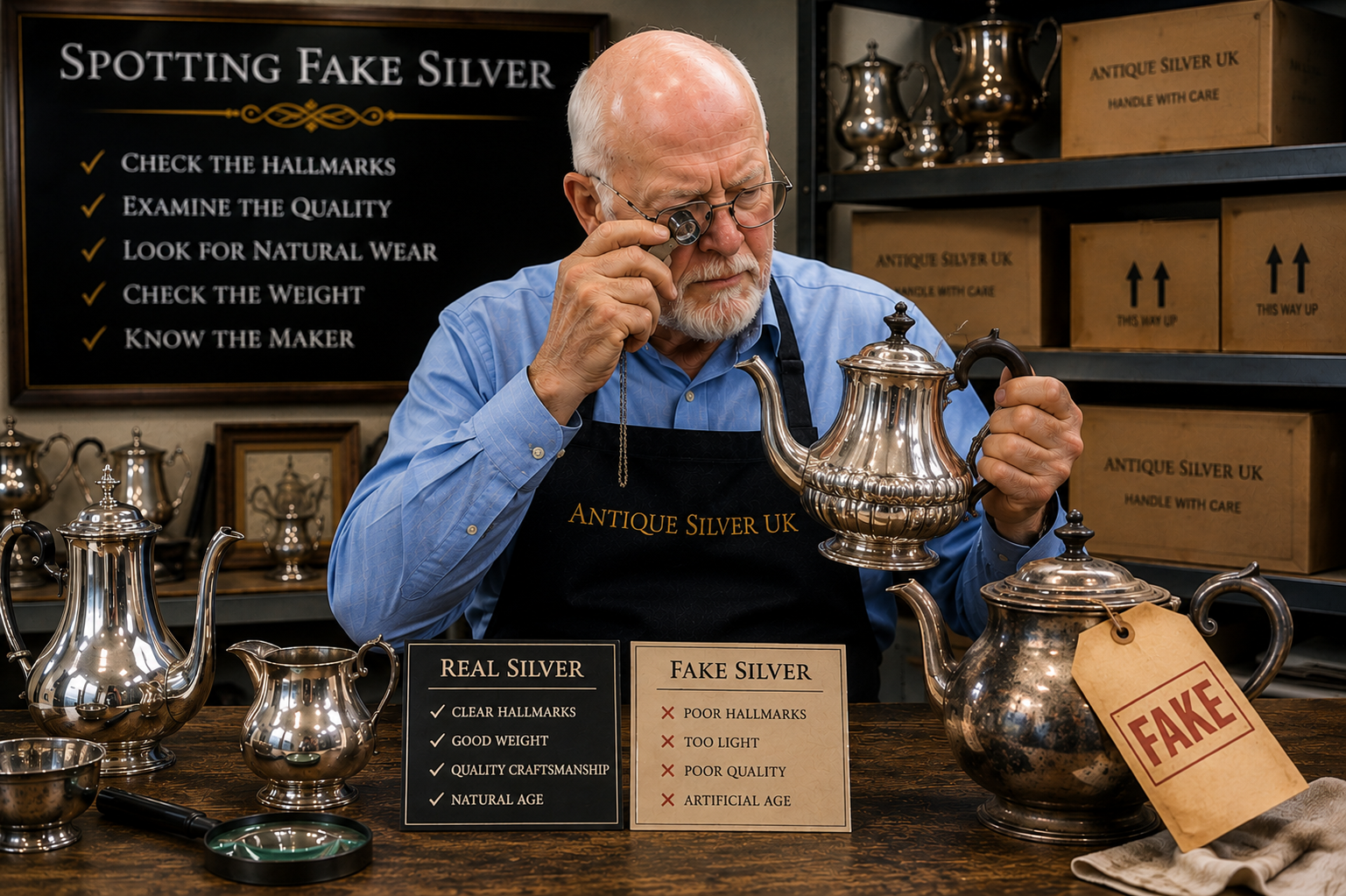
Silver-plated base metal sold as solid silver.
Modern reproductions with fake antique hallmarks.
Artificially aged pieces designed to appear centuries old.
White metal or nickel silver passed off as sterling silver.
1. Check the Hallmarks
British antique silver should carry a clear set of hallmarks that identify:
The purity of the silver.
The assay office.
The maker.
The date letter (on most pieces).
Be cautious if:
Hallmarks appear blurred or poorly struck.
Marks are unusually deep or uneven.
Different hallmarks don't match the period.
The marks look freshly stamped on an old-looking item.
A genuine hallmark tells a story. A fake one often tells the wrong story.
2. Examine the Quality
Authentic antique silver was made by highly skilled silversmiths.
Look for:
Crisp engraving.
Sharp decoration.
Even construction.
Well-finished edges.
Strong solder joints.
Warning signs include:
Rough casting marks.
Soft or blurred decoration.
Poorly fitting lids.
Uneven handles.
Visible seams where there shouldn't be any.
3. Look for Wear in the Right Places
Real antiques develop natural wear over decades or centuries.
Natural wear appears on:
Handles.
Bases.
Lid finials.
High points of decoration.
Artificial ageing often looks:
Too even.
Too dark.
Scratched deliberately.
Chemically stained.
4. Beware of Silver Plate
Many attractive old pieces are silver plated rather than solid silver.
Silver plate is not fake—but it should never be sold as sterling silver.
Signs include:
EPNS markings.
Silver wearing through to brass or copper.
Yellow or reddish metal showing underneath.
Extremely light weight.
5. Feel the Weight
Sterling silver has a satisfying weight.
If an item feels unusually light, it may be:
Aluminium.
White metal.
Zinc alloy.
Hollow construction.
Silver plated over base metal.
Weight alone isn't proof, but it is an important clue.
6. Watch Out for Fake Patina
Many counterfeit pieces are artificially darkened to look old.
Real antique silver usually has:
Soft grey tones.
Gentle ageing.
Bright highlights where handled.
Fake ageing often appears:
Black in every corner.
Thick and dirty looking.
Inconsistent with genuine wear.
7. Research the Maker
Many fake pieces carry the names of famous makers.
Always check whether:
The maker existed.
The hallmark matches the period.
The style matches that silversmith's work.
If something doesn't add up, investigate further.
8. If the Price Seems Too Good...
Quality antique silver retains its value.
Be cautious if someone offers:
Rare Georgian silver at bargain prices.
Large sterling items well below market value.
"Museum quality" pieces with no provenance.
Exceptional rarities without supporting documentation.
If it seems too good to be true, it usually is.
9. Buy from a Trusted Dealer
The safest way to avoid fake silver is to buy from an experienced, reputable dealer who stands behind every item they sell.
A good dealer will:
Correctly identify the piece.
Explain the hallmarks.
Disclose any repairs.
Confirm whether the item is solid silver or plated.
Offer a clear returns policy.
Common Myths
"If a magnet doesn't stick, it's real silver."
Not necessarily. Many non-magnetic metals are not silver.
"Old equals genuine."
Artificial ageing techniques can make modern reproductions appear centuries old.
"Heavy means solid silver."
Some fakes are deliberately weighted to imitate genuine sterling silver.
Final Thoughts
Buying antique silver should be an enjoyable and rewarding experience. The more you learn about hallmarks, craftsmanship, and the characteristics of genuine silver, the easier it becomes to recognise quality and avoid costly mistakes.
If you're ever unsure about a piece, seek expert advice before buying. A trusted dealer can help confirm authenticity and provide valuable information about the item's history, maker, and condition.
At UK Antique Silver, every item is carefully examined for authenticity, quality, and condition before being offered for sale, giving collectors confidence that they are purchasing genuine antique silver with lasting value.
