
How to Clean Antique Silver Safely: A Complete Guide
Antique silver is more than just a beautiful collectable—it is a piece of history. Whether you own a Georgian teapot, a Victorian salver, or an Edwardian cigarette case, proper cleaning and care will help preserve its beauty and value for generations.
Many people worry about cleaning antique silver, fearing they may damage it. The good news is that, with the right techniques, keeping your silver looking its best is straightforward.
Why Does Silver Tarnish?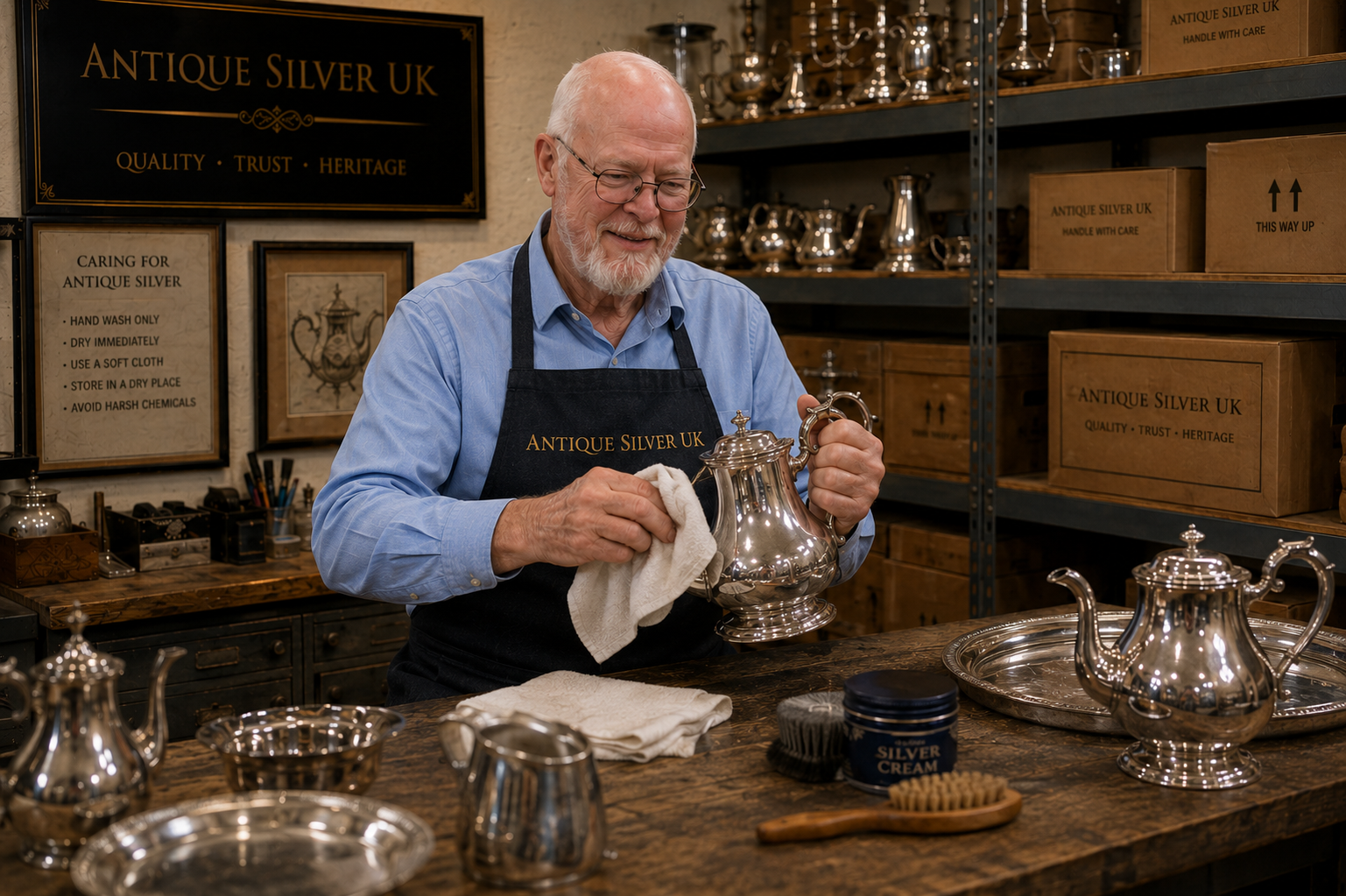
Sterling silver does not rust, but it naturally reacts with sulphur compounds in the air. This creates a dark layer known as tarnish. Tarnishing is completely normal and does not mean your silver is damaged.
While many collectors appreciate the soft patina that develops over time, heavy tarnish can hide the detail and craftsmanship of a piece.
Before You Start
Always determine what you're cleaning.
Solid sterling silver can usually be cleaned safely with quality silver polish.
Silver-plated items require extra care as the silver coating is much thinner.
Items with enamel, ivory, tortoiseshell, mother-of-pearl or wooden handles should never be immersed in water.
If you're unsure, seek professional advice before cleaning.
What You'll Need
A soft lint-free polishing cloth
A quality silver polish
Cotton gloves (optional)
Warm water with a small amount of mild washing-up liquid
A soft toothbrush for detailed areas
A clean microfibre cloth
Step-by-Step Cleaning Guide
1. Remove Dust
Begin by gently wiping the piece with a soft cloth to remove loose dust and dirt.
2. Wash Gently
If necessary, wash the item in warm water with a little mild washing-up liquid. Avoid soaking antique pieces for long periods.
Dry immediately with a soft towel.
3. Apply Silver Polish
Using a small amount of good-quality silver polish, gently rub in straight lines rather than circular motions.
Pay particular attention to decorative engraving, but avoid excessive pressure.
4. Buff to a Shine
Once the polish has dried, buff the surface with a clean polishing cloth until the silver regains its natural lustre.
What You Should Never Do
Avoid these common mistakes:
Never use abrasive cleaners.
Never use steel wool or scouring pads.
Avoid toothpaste—it is far too abrasive.
Do not put antique silver in the dishwasher.
Never soak pieces with glued handles or delicate materials.
Avoid harsh chemical dips unless used by experienced restorers.
Should You Remove Every Bit of Tarnish?
Not always.
Collectors often value the gentle patina that develops naturally over decades. Over-polishing can soften crisp engraving, remove fine detail, and reduce historical character.
Many experienced collectors prefer silver that looks well cared for rather than overly polished.
Caring for Silver Between Cleans
To reduce tarnishing:
Store silver in a dry environment.
Use anti-tarnish cloths or storage bags.
Avoid damp cupboards.
Handle pieces with clean hands.
Polish only when needed rather than on a regular schedule.
Proper storage often reduces the need for frequent cleaning.
Caring for Silver-Plated Items
Silver plate deserves just as much care as solid silver.
Because the silver layer is much thinner, polish lightly and infrequently. Excessive polishing can eventually wear through to the base metal beneath.
Frequently Asked Questions
Can I use baking soda?
Although often recommended online, baking soda can be too abrasive for valuable antique silver and is best avoided.
Can I use aluminium foil cleaning methods?
Chemical cleaning methods involving aluminium foil and bicarbonate remove tarnish quickly but can also remove desirable patina. They are generally not recommended for fine antique silver.
How often should I polish antique silver?
Only when necessary. Light dusting and careful storage are often all that is required.
Final Thoughts
Antique silver has survived for centuries because previous owners cared for it properly. Gentle cleaning, careful handling, and sensible storage will ensure your silver continues to be enjoyed for many years to come.
Whether you're an experienced collector or buying your very first piece, remember that preserving originality is always more important than achieving a mirror-like shine.
A beautifully cared-for piece of antique silver tells a story—and with the right care, it will continue telling that story for generations.
